

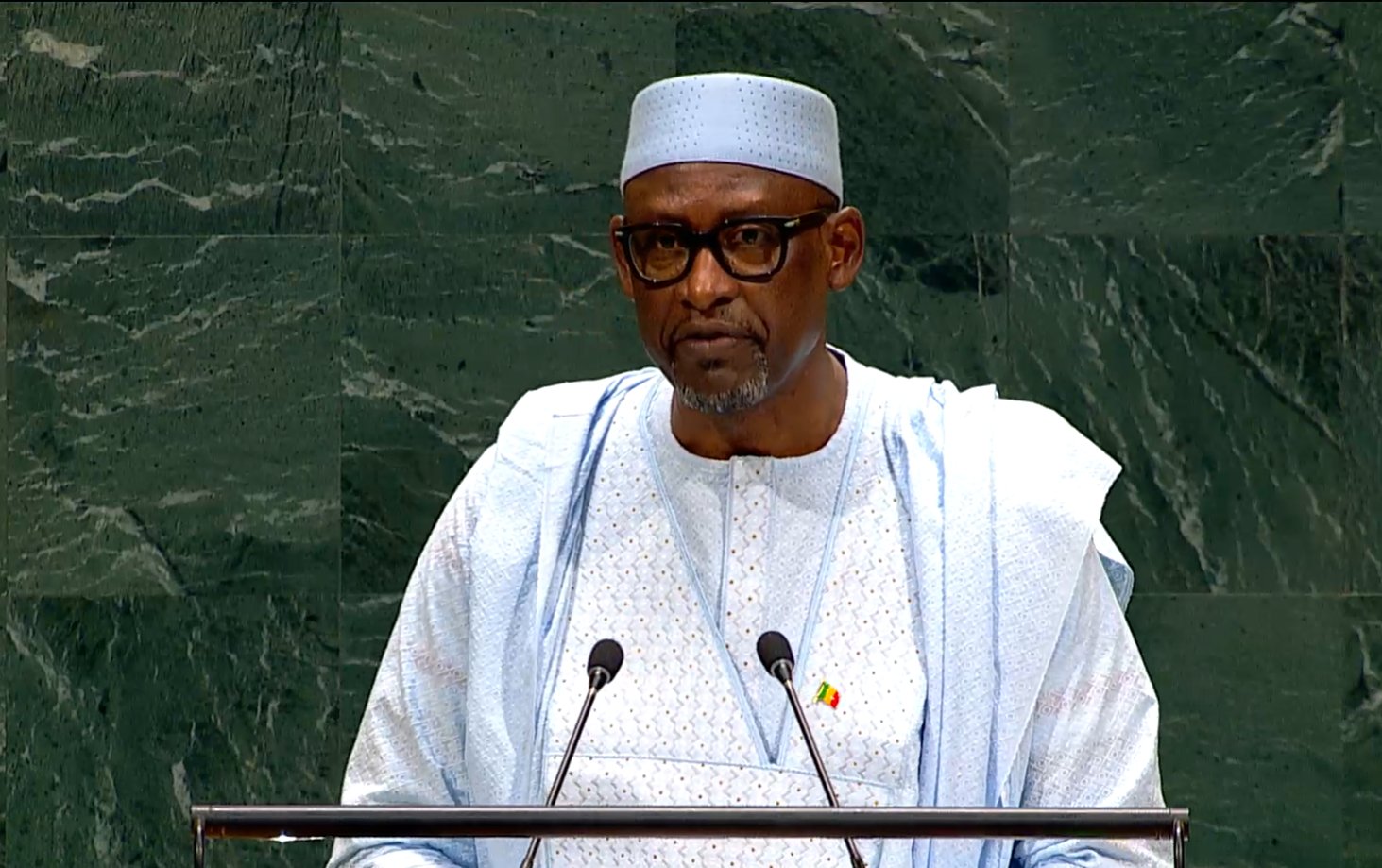
Abdoulaye Diop, Minister for Foreign Affairs and International Cooperation of Mali, said that the UN’s “slowness of anticipation” often reduces it to observing crises after they erupt. Questioning the effectiveness of its mechanisms, he added that interference by the North Atlantic Treaty Organization (NATO) in Libya in 2011 led to a security crisis in the region.
He also called for the lifting of unilateral coercive measures that undermine State sovereignty and endanger livelihoods in approximately 30 countries affected by such sanctions.
The international community must not remain silent about Ukraine’s interference in Africa and its support for terrorist groups, he said, adding: “Ukraine is just the visible part of the iceberg.” Armed terrorist and separatist groups are forming a coalition against Malian institutions, he stressed, which is why his country, Burkina Faso and Niger united to create the Confederation of Sahel States.
“There is no such thing as a good terrorist and a bad terrorist,” he underscored, reaffirming cooperation with all willing international partners. “We do not accept dictates; rather, we seek sincere and healthy cooperation,” he stressed.
Highlighting Mali’s policy of “strategic autonomy”, he said that his country’s sovereignty is also non-negotiable concerning its economic choices. It is managing its natural resources — including gold and lithium — and the Government has placed economic recovery at the centre of its action.
Climate change and desertification constitute major factors of economic, social and environmental vulnerability for Mali and the Sahel, he went on to say, adding that they directly affect livelihoods and threaten peace and security.
Calling for solutions “tailored to Sahelian realities”, he asked for stronger links among efforts to combat desertification, ensure food security, manage water resources and build resilience. It is vital to ensure that Africa’s voice is heard more strongly in the bodies that make decisions shaping its future, he urged.